
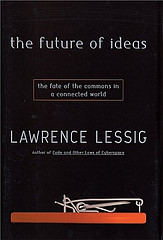
Larry Lessig - "The Future of Ideas"


1 Star2 Stars3 Stars4 Stars5 Stars (No Ratings Yet)
Loading ... Loading ...

Download Torrent

The Internet revolution has come. Some say it has gone. What was responsible for its birth? Who is responsible for its demise?

In The Future of Ideas, Lawrence Lessig explains how the Internet revolution has produced a counterrevolution of devastating power and effect. The explosion of innovation we have seen in the environment of the Internet was not conjured from some new, previously unimagined technological magic; instead, it came from an ideal as old as the nation. Creativity flourished there because the Internet protected an innovation commons.

The Internet’s very design built a neutral platform upon which the widest range of creators could experiment. The legal architecture surrounding it protected this free space so that culture and information–the ideas of our era–could flow freely and inspire an unprecedented breadth of expression. But this structural design is changing–both legally and technically.

The Future of Ideas is the most important work yet written about the grave threat posed to innovation and creativity in America and throughout the world. Lawrence Lessig documents the rapid and largely undebated expansion of government-granted monopolies over broad swatches of the knowledge our society relies on, and compares this with the role common access to knowledge has always played in America's vibrant culture and economy. He has written a Rosetta stone to what is a highly technical, legalistic debate that explains this trend in words the rest of us can understand. This is a debate that finds today's largest global publishing and technology corporations on one side and Thomas Jefferson, the United States Constitution, and the rest of us on the other. If you are only going to read one thought-provoking book this year, this is the one to read.

–-Bob Young, entrepreneur, cofounder and chairman of Red Hat, Inc., and the Center for the Public Domain


Related Links:
The Future of Ideas' Website
Larry Lessig's Website
The Future of Ideas on Wikipedia
Larry Lessig on Wikipedia
LegalTorrents.com

Creative Commons License


  • Glacius

    I'd like to add that the first edition of this book was published in 2001.

    So you have a clearer idea what the book is about, I'll paste here the Table of Contents.

    1: “Free” 3
    PART I : DOT. COMMONS 17
    2: Building Blocks: “Commons” and “Layers” 19
    The Commons 19
    Layers 23
    3: Commons on the Wires 26
    4: Commons Among the Wired 49
    5: Commons, Wire-less 73
    6: Commons Lessons 85
    PART I I : DOT. CONTRAST 101
    7: Creativity in Real Space 103
    Creativity in the Dark Ages 104
    The Arts 104
    CONTENT 105
    PHYSICAL 110
    CODE 111
    Commerce 112
    CODING 112
    MARKETS 114
    8: Innovation from the Internet 120
    New Products from the Net 122
    HTML Books 122
    MP3 123
    Film 124
    Lyric Servers and Culture Databases 124
    New Markets 126
    New Means of Distribution 126
    My.MP3 127
    Napster 130
    New Demand 132
    New Participation: P2P 134
    PART I I I : DOT. CONTROL 143
    9: Old vs. New 145
    10: Controlling the Wires (and Hence the Code Layer) 147
    The End-to-End in Telephones 149
    Fat Pipe 151
    AT&T; Cable 153
    11: Controlling the Wired (and Hence the Content Layer) 177
    Increasing Control 180
    Copyright Bots 180
    CPHack 184
    DeCSS 187
    iCraveTV 190
    MP3 192
    Napster 194
    Eldred 196
    Consequences of Control 199
    12: Controlling Wire-less (and Hence the Physical Layer) 218
    13: What’s Happening Here? 234
    14: Alt. Commons 240
    The Physical Layer 240
    Free Spectrum 241
    Free Highways 244
    The Code Layer 246
    Neutral Platforms 246
    The Content Layer 249
    Copyright 250
    FIVE-YEAR RENEWABLE TERMS 251
    SOFTWARE COPYRIGHT 252
    PROTECTINGINNOVATION 253
    PROTECTINGMUSIC 254
    REBUILDINGTHE CREATIVE COMMONS 255
    LIMITS ONCODE 256
    LIMITS ONCONTRACT 257
    LIMIT COMMERCIAL EXPLOITATION 258
    Patents 259
    MORATORIUM 259
    DAMAGES 260
    REFORM 260
    15: What Orrin Understands 262
    Notes 269
    Index 335

    This book is published the year that Creative Commons was founded, yet you can find a few mentions of "Creative Commons" on the book. It seems to me this is the book that helped Larry Lessig coin the name for this wonderful licensing model. In the book you can see about other "Commons" and then it makes a lot of sense why we need a "Creative Commons" and why it's named liked that.

  • Glacius

    I'd like to add that the first edition of this book was published in 2001.

    So you have a clearer idea what the book is about, I'll paste here the Table of Contents.

    1: “Free” 3
    PART I : DOT. COMMONS 17
    2: Building Blocks: “Commons” and “Layers” 19
    The Commons 19
    Layers 23
    3: Commons on the Wires 26
    4: Commons Among the Wired 49
    5: Commons, Wire-less 73
    6: Commons Lessons 85
    PART I I : DOT. CONTRAST 101
    7: Creativity in Real Space 103
    Creativity in the Dark Ages 104
    The Arts 104
    CONTENT 105
    PHYSICAL 110
    CODE 111
    Commerce 112
    CODING 112
    MARKETS 114
    8: Innovation from the Internet 120
    New Products from the Net 122
    HTML Books 122
    MP3 123
    Film 124
    Lyric Servers and Culture Databases 124
    New Markets 126
    New Means of Distribution 126
    My.MP3 127
    Napster 130
    New Demand 132
    New Participation: P2P 134
    PART I I I : DOT. CONTROL 143
    9: Old vs. New 145
    10: Controlling the Wires (and Hence the Code Layer) 147
    The End-to-End in Telephones 149
    Fat Pipe 151
    AT&T Cable 153
    11: Controlling the Wired (and Hence the Content Layer) 177
    Increasing Control 180
    Copyright Bots 180
    CPHack 184
    DeCSS 187
    iCraveTV 190
    MP3 192
    Napster 194
    Eldred 196
    Consequences of Control 199
    12: Controlling Wire-less (and Hence the Physical Layer) 218
    13: What’s Happening Here? 234
    14: Alt. Commons 240
    The Physical Layer 240
    Free Spectrum 241
    Free Highways 244
    The Code Layer 246
    Neutral Platforms 246
    The Content Layer 249
    Copyright 250
    FIVE-YEAR RENEWABLE TERMS 251
    SOFTWARE COPYRIGHT 252
    PROTECTINGINNOVATION 253
    PROTECTINGMUSIC 254
    REBUILDINGTHE CREATIVE COMMONS 255
    LIMITS ONCODE 256
    LIMITS ONCONTRACT 257
    LIMIT COMMERCIAL EXPLOITATION 258
    Patents 259
    MORATORIUM 259
    DAMAGES 260
    REFORM 260
    15: What Orrin Understands 262
    Notes 269
    Index 335

    This book is published the year that Creative Commons was founded, yet you can find a few mentions of "Creative Commons" on the book. It seems to me this is the book that helped Larry Lessig coin the name for this wonderful licensing model. In the book you can see about other "Commons" and then it makes a lot of sense why we need a "Creative Commons" and why it's named liked that.

  • Pingback: Angel Leon

  • Pingback: Darren John Rea

  • Pingback: Darren John Rea

  • Pingback: FrostClick

  • Pingback: thefarmproject

Permalink
Posted on March 31, 2009 at 8:25 AM